...not sacrifice
Matthew 12:6-8 But I say to you, One greater than the temple is here. 7 But if you had known what this is, "I desire mercy and not sacrifice," you would not have condemned the guiltless. (Hosea 6:6 ) 8 For the Son of Man is also Lord of the Sabbath.
I was watching the news the other day and there was this young girl whose dad had been murdered and the reporter asked her what she was hoping for. She said she needed the murderer to be given the death penalty and even that wasn't good enough for her revenge. This wasn't the first time I've noticed this. On those 48 Hours Murder-She-Wrote type shows where they explore murderous crimes, the families of the victims almost invariably have a deep seated bitterness and unwholesome anger which they express with tears and gritted teeth.
What good does that do? Not one slender whit, which happens to be much smaller than a splinter, by the way.
Mercy and forgiveness is valued by God much greater than sacrifice is. If the Hebrews had learned this... the Jews had learned this, then they would never have turned from Jesus. Therefore, how can we be different? Mercy is that thing that God gave us while we were still sinners. Forgiveness is what He gave us as He watched His Son go to the cross. According to the world, that is impossible. I look around and see so much hate and so much unforgiveness and bitterness. What is so sad is that most people cannot see unforgiveness for the cancer it is. How much energy is wasted by harboring hatred and unforgiveness. It does not mean that we have to fraternize with those who have hurt us, nor do we have to allow them the opportunity to do it to us again. Jesus said to be wise as serpents but harmless as doves (Matthew 10:16).
How do we do that?
First be willing to let go of the hurt. If we keep rolling that hurt around in mind, nurturing the anger, nursing the hurt, reveling in the injustice of it all... we are merely playing into Satan's hands and opening our armor for the fiery dart of bitterness. Make no mistake, we can hide our feelings from friends and loved ones, but we cannot hide them from Satan. He knows our weakness and exploits it to the hilt of that dart. There is the sting. Not the hurt from the betrayal or the hurtful words or the lack of support. Examine that and see if it is really as bad as it feels. Sometimes, we blow things out of proportion and add importance to nit-picky things. Oh, come on, you can think of at least one time when you did that. I can think of a dozen. I am not belittling that really huge thing like infidelity. Been there, too. That kind of anger takes several years to work through. But, oh how great freedom felt when I finally let that last bit of anger go.
Second, decide to give mercy and to forgive. It absolutely is a decision. Just like deciding to lose weight or quit smoking or deciding on a worship lifestyle instead of a worldly lifestyle.
Third, understand it will take lots of time. We have the Holy Spirit inside us and we have the mind of Christ, but we are not God. It takes a lot longer for us because we've got so much more to influence us. The world, our friends and acquaintances who "egg" us on.
Fourth, set the thoughts of anger aside. Paul said to get angry but do not sin. That kind of anger is over some injustice. Nothing hurts a child of God that is a just hurt. God does not hurt us. He may discipline us and chastise us for our unruly behavior, but He will never harm us or hurt us. It is our pride that gets hurt so often, and when it is bruised, it is painful. So setting aside the thoughts also includes setting aside pride. It only gets in the way of forgiveness and sets a flame to anger. God does not like it when someone messes with His kid. His vengence is so much wiser and so much better than ours ever could be. The question here is how can we expect mercy and forgiveness from God when we harbor unforgiveness toward a brother or sister in Christ?
It is commanded that we forgive our brothers and sisters in Christ anything. That hard verse comes to mind. Forgive or your Father in Heaven will not forgive you. But a much better one expresses God's heart.
Luke 6:37 Judge not, and in no way be judged. Do not condemn, and in no way you will be condemned. Forgive, and you will be forgiven. 38 Give, and good measure will be given to you, pressed down and shaken together, and running over, they will give into your bosom. For the same measure which you measure, it will be measured back to you.
If that isn't "What goes around comes around," I don't know what is.
“But what about unbelievers?” Good, no excellent question. Ever notice how Jesus so often answered a question with a question? Can a believer nurture anger and bitterness toward someone not a believer and still be given the blessings of God, or even have room in the heart for God?
This is a repeat from Live as if... I am finding it too difficult to come up with fresh stuff AND move AND handle the blog at Picayune Chamber AND do a newsletter AND do a weekly E-zine AND do a weekly Update. I've got things that need doing and I am so appreciative of the three people who come here for being so patient while I get some things done. AMEN.


Spread too thin
I am spread way too thin these days. I keep thinking about this Chamber of Commerce exec who said, "Do just a few things really well."
Jesus did so very many things extremely well, except He chose not to change stubborn hearts. It's one of those things that makes you go hmmmm. Jesus could have changed them, He could have touched those inner souls and could have, with the brush of His hand bent the stiffest of necks. Yet, He chose not to.
It's that freedom of choice thing that gets so many people hot under the collar.
Jesus presented the Truth and He left it up to those who were listening to believe... or not believe.
Compare...
Hot, tired and thirsty He asks a woman for a drink and winds up telling her all about living water. She drank eagerly and brought all from her village who would come with her to drink of this living water.
After crossing the Sea of Gallilee, he tells his disciples (more than 500 of them) that His body is the Bread of Life and that anyone coming to Him would never go hungry or thirsty again. And this made many of His disciples sick at their stomachs, so they turned their backs on Him and left Him that day, never to return down that dusty road.
The same choice only much different decisions.
Because Jesus spoke to a Samaritan woman, an entire village heard the Gospel and was saved during the three days Jesus stayed there performing no miracles, just speaking Truth.
Because Jesus said He was the Son of God and spoke the truth about being the Bread of Life, thousands of Jews chose to ignore His teachings and cling to the religous leaders.
It isn't about doing something really well. It isn't about doing anything. It is about believing truth. Do you believe?
Jesus did so very many things extremely well, except He chose not to change stubborn hearts. It's one of those things that makes you go hmmmm. Jesus could have changed them, He could have touched those inner souls and could have, with the brush of His hand bent the stiffest of necks. Yet, He chose not to.
It's that freedom of choice thing that gets so many people hot under the collar.
Jesus presented the Truth and He left it up to those who were listening to believe... or not believe.
Compare...
Hot, tired and thirsty He asks a woman for a drink and winds up telling her all about living water. She drank eagerly and brought all from her village who would come with her to drink of this living water.
After crossing the Sea of Gallilee, he tells his disciples (more than 500 of them) that His body is the Bread of Life and that anyone coming to Him would never go hungry or thirsty again. And this made many of His disciples sick at their stomachs, so they turned their backs on Him and left Him that day, never to return down that dusty road.
The same choice only much different decisions.
Because Jesus spoke to a Samaritan woman, an entire village heard the Gospel and was saved during the three days Jesus stayed there performing no miracles, just speaking Truth.
Because Jesus said He was the Son of God and spoke the truth about being the Bread of Life, thousands of Jews chose to ignore His teachings and cling to the religous leaders.
It isn't about doing something really well. It isn't about doing anything. It is about believing truth. Do you believe?
But I have no husband
The message of the Cross is "No Stones". There are two stories that come to mind which convey this strongly and Jesus is prominant in both. One is the woman who was caught in adultery and brought before Jesus, the other is the Woman at the Well. Can't you just feel the heat of that day? It was the sixth hour. Jesus was weary from His journey. He was hot and He was thirsty, but that didn't stop Him from recruiting a most unlikely missionary. Someone who was counted as worthless in her village, but would be instrumental in the salvation of the entire village...
Jesus instructed her before He told her to go call her husband, and He did a lot more than tell her she was living in adultery.
He spoke to her... Jews of that day lived in mortal hatred of Samaritans who they called curs and halfbreeds. They so dispised the Samaritans they would walk 100 miles out of the way around the country God gave to Joseph's descendants just to not come into contact with the tainted soil.
He asked a drink of her... Jews would have rather endured a time of torturous thirst rather than ask anything from a Samaritan.
He did not draw back from her... This was the heat of the day at the 6th hour. She came to the well at that time most likely because "decent" women shunned her and men found extreme fault with her. Most likely because she was barren. Men cast her aside, usually women did not ask or obtain divorces, but men had no compunction if they were not given heirs. Most likely she was beautiful and had a good personality or at least could cook well becaue she had been married five times. But now, having been cast off five times, she was probably getting on in years, not as beautiful as in her youth and no hope for giving fruit from her womb so the man she was currently living with had not married her. She was a stigma, considered far below worthiness, yet our LORD not only spoke to her, not only asked of her, but leaned forward and taught her about living water.
He told her what she had done... Any gypsy can foretell the future in broad general terms, but no one unless gifted by God can tell you what you did yesterday or five years ago with accuracy. Jesus said she had had five husbands and was now living with a man not her husband. At no time in the conversation did Jesus say, "You are an adulterer." Nor did He say, "You are living in adultery." He simply spoke facts without condemnation or judgement.
She perceived... The woman recognized the truth He spoke and called Him a prophet.
She asked... The woman asked about worship. She called Him on the Jewish tradition that worship could only take place in Jerusalem. When Jesus told her point blank that Samaritans didn't know what they worshiped and that salvation came from the Jews, meaning that the Messiah would be from the Royal Lineage of David, she accepted the truth without argument as most of the Jews gave Him.
When Jesus told her He was the Messiah...
She became a missionary... The woman went to her village and rounded up everyone who would listen to her. I can hear her excitment and I know her eagerness. She didn't say, "Go listen to Him." She said, "Come hear Him, is He not the Christ?" She was herding them toward Jesus as if their lives depended on it, which they did. "He told me everything I did."
She was saved not condemned... So often today we see sin and glorify the sin by hate, by accusation, by condemnation, by pointing fingers and by gossip, by shunning, by ostracising, by cold shoulders, by casting off, by hurtful words and actions.
Everything that woman felt... the rejection, the wounded heart because every man she married divorced her, all her friends denied her, words of condemnation and scorn lacerated her and scarred her soul... and yet, everything she felt, Jesus felt.
Jesus forgave. Jesus loved. Jesus died, and now He lives. Amen.
The message of the Cross is "No Stones"
Jesus instructed her before He told her to go call her husband, and He did a lot more than tell her she was living in adultery.
He spoke to her... Jews of that day lived in mortal hatred of Samaritans who they called curs and halfbreeds. They so dispised the Samaritans they would walk 100 miles out of the way around the country God gave to Joseph's descendants just to not come into contact with the tainted soil.
He asked a drink of her... Jews would have rather endured a time of torturous thirst rather than ask anything from a Samaritan.
He did not draw back from her... This was the heat of the day at the 6th hour. She came to the well at that time most likely because "decent" women shunned her and men found extreme fault with her. Most likely because she was barren. Men cast her aside, usually women did not ask or obtain divorces, but men had no compunction if they were not given heirs. Most likely she was beautiful and had a good personality or at least could cook well becaue she had been married five times. But now, having been cast off five times, she was probably getting on in years, not as beautiful as in her youth and no hope for giving fruit from her womb so the man she was currently living with had not married her. She was a stigma, considered far below worthiness, yet our LORD not only spoke to her, not only asked of her, but leaned forward and taught her about living water.
He told her what she had done... Any gypsy can foretell the future in broad general terms, but no one unless gifted by God can tell you what you did yesterday or five years ago with accuracy. Jesus said she had had five husbands and was now living with a man not her husband. At no time in the conversation did Jesus say, "You are an adulterer." Nor did He say, "You are living in adultery." He simply spoke facts without condemnation or judgement.
She perceived... The woman recognized the truth He spoke and called Him a prophet.
She asked... The woman asked about worship. She called Him on the Jewish tradition that worship could only take place in Jerusalem. When Jesus told her point blank that Samaritans didn't know what they worshiped and that salvation came from the Jews, meaning that the Messiah would be from the Royal Lineage of David, she accepted the truth without argument as most of the Jews gave Him.
When Jesus told her He was the Messiah...
She became a missionary... The woman went to her village and rounded up everyone who would listen to her. I can hear her excitment and I know her eagerness. She didn't say, "Go listen to Him." She said, "Come hear Him, is He not the Christ?" She was herding them toward Jesus as if their lives depended on it, which they did. "He told me everything I did."
She was saved not condemned... So often today we see sin and glorify the sin by hate, by accusation, by condemnation, by pointing fingers and by gossip, by shunning, by ostracising, by cold shoulders, by casting off, by hurtful words and actions.
Everything that woman felt... the rejection, the wounded heart because every man she married divorced her, all her friends denied her, words of condemnation and scorn lacerated her and scarred her soul... and yet, everything she felt, Jesus felt.
Jesus forgave. Jesus loved. Jesus died, and now He lives. Amen.
The message of the Cross is "No Stones"
Movie cliche's
These from Matthew Boice. He seems to know something about Star Wars:
Buttons are impervious to the Force; you can use the Force to fling an object at a button, but not to press the button directly.
Everyone falling from a great height is strong enough to grab a non-elastic rope or cable, stopping their descent instantaneously, without ripping their arms off. Also, a superhero in a standing position can catch you 4 feet above the ground without hurting you. The lesson is, just don't hit the ground and you'll be fine.
Even though turning on a light doesn't eject the bulb from its socket, giving a person an electric shock will fling him over a counter (there is always a counter or a table or a hand cart) and across the room.
Electricity prefers to travel through the air just outside of an actual conductor to give it that neat crackly lightning effect.
Castration and groin injuries change the pitch of a man's voice as if he had never had testosterone in the first place.
Guns have no recoil.
No airliner can survive an action movie without a gunshot causing decompression. Luckily, having half the fuselage ripped off will not change the aerodynamics of the plane.
A ghost possessing a living person uses that person's lips and tongue to form sounds, but it uses someone else's vocal cords.
Some thoughts of my own...
It is necessary for the heroine to pant when she’s been scared because this allows the audience to not have to hold their breath. (I thought everyone knew this.)
People actually do go into shock at traumatic events like car wrecks and erupting volcanoes but only those that do not have a last name in the credits or who are known as ‘man on highway’ or ‘waitress no. 2’ die.
Cars are always crashed end over end or take 3 flips in the air. The reason for this is so that there is a reason for all the fake blood or for the broken ankle which makes it necessary for the female to be carried over 50 miles of desert.
Which reminds me that broken ankles, twisted ankles or sprained ankles never swell up in movies, nor do they turn blue. It only takes about an hour and the thing’s perfectly healed.
That reminds me that bruises, cuts, scrapes and vast amounts of blood loss are miraculously healed in the matter of a few moments, but a broken pair of glasses must be mended with a white piece of tape for the entire movie.
Action movie actors can run faster than cars.
It only takes 30 seconds to teach someone how to dance good enough to win an award – at the max an hour.
It is perfectly all right to wake up and kiss your mate without brushing your teeth. In the movies there is no such thing as morning breath.
It is absolutely necessary in horror movies for the victim to lock all the doors and windows with the homicidal maniac inside the house.
Arbitrary endings are out of fashion.... THANK you!
It is critical to make a movie from a book that actually had no foul language and put foul language in it for exactly what reason I have no clue.
What are some things YOU have noticed?
Buttons are impervious to the Force; you can use the Force to fling an object at a button, but not to press the button directly.
Everyone falling from a great height is strong enough to grab a non-elastic rope or cable, stopping their descent instantaneously, without ripping their arms off. Also, a superhero in a standing position can catch you 4 feet above the ground without hurting you. The lesson is, just don't hit the ground and you'll be fine.
Even though turning on a light doesn't eject the bulb from its socket, giving a person an electric shock will fling him over a counter (there is always a counter or a table or a hand cart) and across the room.
Electricity prefers to travel through the air just outside of an actual conductor to give it that neat crackly lightning effect.
Castration and groin injuries change the pitch of a man's voice as if he had never had testosterone in the first place.
Guns have no recoil.
No airliner can survive an action movie without a gunshot causing decompression. Luckily, having half the fuselage ripped off will not change the aerodynamics of the plane.
A ghost possessing a living person uses that person's lips and tongue to form sounds, but it uses someone else's vocal cords.
Some thoughts of my own...
It is necessary for the heroine to pant when she’s been scared because this allows the audience to not have to hold their breath. (I thought everyone knew this.)
People actually do go into shock at traumatic events like car wrecks and erupting volcanoes but only those that do not have a last name in the credits or who are known as ‘man on highway’ or ‘waitress no. 2’ die.
Cars are always crashed end over end or take 3 flips in the air. The reason for this is so that there is a reason for all the fake blood or for the broken ankle which makes it necessary for the female to be carried over 50 miles of desert.
Which reminds me that broken ankles, twisted ankles or sprained ankles never swell up in movies, nor do they turn blue. It only takes about an hour and the thing’s perfectly healed.
That reminds me that bruises, cuts, scrapes and vast amounts of blood loss are miraculously healed in the matter of a few moments, but a broken pair of glasses must be mended with a white piece of tape for the entire movie.
Action movie actors can run faster than cars.
It only takes 30 seconds to teach someone how to dance good enough to win an award – at the max an hour.
It is perfectly all right to wake up and kiss your mate without brushing your teeth. In the movies there is no such thing as morning breath.
It is absolutely necessary in horror movies for the victim to lock all the doors and windows with the homicidal maniac inside the house.
Arbitrary endings are out of fashion.... THANK you!
It is critical to make a movie from a book that actually had no foul language and put foul language in it for exactly what reason I have no clue.
What are some things YOU have noticed?
Deep spring waters that never run dry
Isaiah 58 hold dear words of promise:
If you take away the yoke from your midst, the pointing of the finger, and speaking wickedness, if you extend your soul to the hungry and satisfy the afflicted soul, then your light shall dawn in the darkness, and your gloom shall be as the noon day. The LORD will guide you continually, and satisfy your soul in drought, and strengthen your bones; You shall be like a watered garden, and like a spring of water, whose waters do not fail. Those from among you shall build the old waste places; you shall raise up the foundations of many generations; and you shall be called the Repairer of the Breach, the Restorer of Streets to Dwell In... the Mouth of the LORD has spoken.
But sometimes Ifeel so very dry, parched and panting for Him like the deer pants for water. I thirst for more of Him. It is not with a faint heart that I reach out for Him. It is with confidence that I know He will fill me up, if I look up. I am saved with no effort on my part except to believe He is Who He says He is and will do what He says He will do. It is with no effort on my part that I live the Christian life except to determine I will not allow anything to come between me and my first Love. Without that, I am lost. Not because God has dropped me from His hand. I am lost wholly on my part, my side of therelationship. I have not cracked open my Bible or have not prayed. From God's vantage point, there is no wall. There is a difficult thing to understand.
If you take away the yoke from your midst, the pointing of the finger, and speaking wickedness, if you extend your soul to the hungry and satisfy the afflicted soul, then your light shall dawn in the darkness, and your gloom shall be as the noon day. The LORD will guide you continually, and satisfy your soul in drought, and strengthen your bones; You shall be like a watered garden, and like a spring of water, whose waters do not fail. Those from among you shall build the old waste places; you shall raise up the foundations of many generations; and you shall be called the Repairer of the Breach, the Restorer of Streets to Dwell In... the Mouth of the LORD has spoken.
But sometimes Ifeel so very dry, parched and panting for Him like the deer pants for water. I thirst for more of Him. It is not with a faint heart that I reach out for Him. It is with confidence that I know He will fill me up, if I look up. I am saved with no effort on my part except to believe He is Who He says He is and will do what He says He will do. It is with no effort on my part that I live the Christian life except to determine I will not allow anything to come between me and my first Love. Without that, I am lost. Not because God has dropped me from His hand. I am lost wholly on my part, my side of therelationship. I have not cracked open my Bible or have not prayed. From God's vantage point, there is no wall. There is a difficult thing to understand.
Trinity Yachts
I heard something yesterday from the president of Trinity Yachts. He said when he was sitting with a man who was buying a yacht from him, the papers were piled high and there was at least twenty places for them both to sign. The man looked at him and said, "This is the last time I want to see this contract. If it ever has to come out again, that means that one of us is lying."
I find that so telling, and so true. Why don't we think that way anymore?
I find that so telling, and so true. Why don't we think that way anymore?
Things that seem like a good idea
Have you ever had a brain spasm when you thought something was a really good idea and then it turned out it was fabulously lousy?
We're having a CASA fund raiser next Saturday and the committee thought it would be great if the firefighters and crimefighters had a little contest on who could sell the most tickets. On the surface, that looks fun and great! But...
My advice to you is if you have one of these Brain Spasms, that you think it all the way though first. These guys did not have any "buy in". That's the only thing I can think of why they didn't sell any tickets. I would think that helping children who have been abused would be something just about everyone would care enough about to sell at least 1 $5 ticket for some really great fried chicken. Well... no. It didn't happen. I'm not so happy about that.
However, I have put it in God's hands. The main thing with this was to get community awareness and that is what is happening. So we'll see what God causes to happen.
gb
We're having a CASA fund raiser next Saturday and the committee thought it would be great if the firefighters and crimefighters had a little contest on who could sell the most tickets. On the surface, that looks fun and great! But...
My advice to you is if you have one of these Brain Spasms, that you think it all the way though first. These guys did not have any "buy in". That's the only thing I can think of why they didn't sell any tickets. I would think that helping children who have been abused would be something just about everyone would care enough about to sell at least 1 $5 ticket for some really great fried chicken. Well... no. It didn't happen. I'm not so happy about that.
However, I have put it in God's hands. The main thing with this was to get community awareness and that is what is happening. So we'll see what God causes to happen.
gb
Who is Cindy McCain?
I found this very interesting ... and astoundingly, it is true.
McCain's Better Half (Cindy)
By INVESTOR'S BUSINESS DAILY
Posted Thursday, May 01, 2008 4:20 PM PT
Election 2008: Cindy Hensley McCain has been disparaged as a trophy wife, a Barbie, an heiress with fancy purses, even the Paris Hilton of politics. But there's more to the picture than meets the eye:
Yes, Mrs. McCain is the perfectly coiffed blonde standing dutifully behind the senator during his speeches. And yes, she wears stylish clothing and carries a Prada purse. And it's true she doesn't say much. But feminist critics who write her off as a 'stand-by-your-man' shrinking violet are selling her short. In many ways, Cindy McCain stacks up sturdier than Hillary Clinton or Michelle Obama. And she'd make a more impressive first lady.
Mrs. McCain: More than meets the eye.
While Obama's wife has been hating America, complaining about the war and undermining our troops serving in Iraq and Afghanistan, McCain's wife has been worrying about her sons who actually are fighting or planning to fight in the war on terror. One, in fact, was until a few months ago deployed in Iraq during some of the worst violence.
You don't hear the McCains talk about it, but their 19-year-old Marine, Jimmy, is preparing for his second tour of duty. Their 21-year-old son, Jack, is poised to graduate from Annapolis and also could join the Marines as a second lieutenant. The couple made the decision not to draw attention to their sons out of respect for other families with sons and daughters in harm's way.
Cindy also says she doesn't want to risk falling apart on the campaign trail talking about Jimmy who was so young when he enlisted she had to sign consent forms for his medical tests before he could report for duty and potentially upsetting parents of soldiers who are serving or have been killed.
The McCains want to make sure their boys get no special treatment. Same goes for their five other children, including a daughter they adopted from Bangladesh. During a visit to Mother Teresa's orphanage there, Cindy noticed a dying baby .. The orphanage could not provide the medical care needed to save her life. So she brought the child home to America for the surgery she desperately needed. The baby is now their healthy, 16-year-old daughter, Bridget.
Though all seven McCain children including two Sen. McCain adopted from his first marriage are supportive of their father, they prefer their privacy to the glare of the campaign trail. Another daughter, Meghan, 23, helps him behind d the scenes.
Cindy McCain not only cherishes her children, but also her country, which in an election year filled with America-bashing, is a refreshing novelty. She seethed when she heard Michelle Obama' s unpatriotic remarks that she only recently grew proud of America. 'I am very proud of my country,' Mrs. McCain asserted.
She also may be tougher than the other women in the race. While Hillary thinks she's come under sniper fire on mission trips abroad, Cindy has actually seen violence. She witnessed a boy get blown up by a mine in Kuwait during a trip with an international group that removes land mines from war-torn countries.
Mrs. McCain also is a hands-on philanthropist. She sits on the board of Operation Smile, which arranges for plastic surgeons to fix cleft palates and other birth defects. She also has helped organize relief missions to Micronesia.
During a scuba-diving vacation to the islands, Mrs. McCain took a friend to a local hospital to have a cut treated. She was shocked, and saddened, by what she saw.
'They opened the door to the OR, where the supplies were, and there were two cats and a whole bunch of rats climbing out of the sterile supplies,' she recalled. 'They had no X-ray machine, no beds. To me, it was devastating because it was a U.S. trust territory.'
As soon as she returned home, she arranged for medical equipment and teams of doctors to be sent to treat the island children.
Michelle Obama may contribute to CARE, which fights global poverty and works to empower poor women. Cindy sits on its board.
While the Democrat women talk about helping the poor and needy, Cindy McCain actually rolls up her sleeves and does it. Who's the out-of-touch elitist?
McCain's Better Half (Cindy)
By INVESTOR'S BUSINESS DAILY
Posted Thursday, May 01, 2008 4:20 PM PT
Election 2008: Cindy Hensley McCain has been disparaged as a trophy wife, a Barbie, an heiress with fancy purses, even the Paris Hilton of politics. But there's more to the picture than meets the eye:
Yes, Mrs. McCain is the perfectly coiffed blonde standing dutifully behind the senator during his speeches. And yes, she wears stylish clothing and carries a Prada purse. And it's true she doesn't say much. But feminist critics who write her off as a 'stand-by-your-man' shrinking violet are selling her short. In many ways, Cindy McCain stacks up sturdier than Hillary Clinton or Michelle Obama. And she'd make a more impressive first lady.
Mrs. McCain: More than meets the eye.
While Obama's wife has been hating America, complaining about the war and undermining our troops serving in Iraq and Afghanistan, McCain's wife has been worrying about her sons who actually are fighting or planning to fight in the war on terror. One, in fact, was until a few months ago deployed in Iraq during some of the worst violence.
You don't hear the McCains talk about it, but their 19-year-old Marine, Jimmy, is preparing for his second tour of duty. Their 21-year-old son, Jack, is poised to graduate from Annapolis and also could join the Marines as a second lieutenant. The couple made the decision not to draw attention to their sons out of respect for other families with sons and daughters in harm's way.
Cindy also says she doesn't want to risk falling apart on the campaign trail talking about Jimmy who was so young when he enlisted she had to sign consent forms for his medical tests before he could report for duty and potentially upsetting parents of soldiers who are serving or have been killed.
The McCains want to make sure their boys get no special treatment. Same goes for their five other children, including a daughter they adopted from Bangladesh. During a visit to Mother Teresa's orphanage there, Cindy noticed a dying baby .. The orphanage could not provide the medical care needed to save her life. So she brought the child home to America for the surgery she desperately needed. The baby is now their healthy, 16-year-old daughter, Bridget.
Though all seven McCain children including two Sen. McCain adopted from his first marriage are supportive of their father, they prefer their privacy to the glare of the campaign trail. Another daughter, Meghan, 23, helps him behind d the scenes.
Cindy McCain not only cherishes her children, but also her country, which in an election year filled with America-bashing, is a refreshing novelty. She seethed when she heard Michelle Obama' s unpatriotic remarks that she only recently grew proud of America. 'I am very proud of my country,' Mrs. McCain asserted.
She also may be tougher than the other women in the race. While Hillary thinks she's come under sniper fire on mission trips abroad, Cindy has actually seen violence. She witnessed a boy get blown up by a mine in Kuwait during a trip with an international group that removes land mines from war-torn countries.
Mrs. McCain also is a hands-on philanthropist. She sits on the board of Operation Smile, which arranges for plastic surgeons to fix cleft palates and other birth defects. She also has helped organize relief missions to Micronesia.
During a scuba-diving vacation to the islands, Mrs. McCain took a friend to a local hospital to have a cut treated. She was shocked, and saddened, by what she saw.
'They opened the door to the OR, where the supplies were, and there were two cats and a whole bunch of rats climbing out of the sterile supplies,' she recalled. 'They had no X-ray machine, no beds. To me, it was devastating because it was a U.S. trust territory.'
As soon as she returned home, she arranged for medical equipment and teams of doctors to be sent to treat the island children.
Michelle Obama may contribute to CARE, which fights global poverty and works to empower poor women. Cindy sits on its board.
While the Democrat women talk about helping the poor and needy, Cindy McCain actually rolls up her sleeves and does it. Who's the out-of-touch elitist?
Shadow of the Moon
I had forgotten that Christmas Eve of 1968 the astronauts who orbited the moon read...
"In the beginning God created the heavens and the earth..." All three astronauts decided that first chapter of Genesis would be read and they put it in a fire proofed bag so they could read it.
What a great testimony. Of course, Jim Lovell ruined it by saying that it might have been inappropriate, he didn't know. Way to straddle the fence.
However, the special on Discovery Channel was most excellent and brought back so many memories.
Where were you on July 17, 1969?
I was on the couch at home and watching the most thrilling event of the century.
"In the beginning God created the heavens and the earth..." All three astronauts decided that first chapter of Genesis would be read and they put it in a fire proofed bag so they could read it.
What a great testimony. Of course, Jim Lovell ruined it by saying that it might have been inappropriate, he didn't know. Way to straddle the fence.
However, the special on Discovery Channel was most excellent and brought back so many memories.
Where were you on July 17, 1969?
I was on the couch at home and watching the most thrilling event of the century.
Friends are wonderful
Friends are wonderful and family is wonderful. My birthday was actually a great day. Mom and I spent it together with my daughter and she kept us in stitches. She's the one that is the casting director. Please pray that she gets this movie coming the 1st of June.
I have come up against a writer's block. I am using my Bible study I wrote back in 2005 for my columns at Live As If.org. They are being well received, it seems, but I feel sort of dried up. Like I don't have any more words to spill out. Why is that? A person gets to a roadblock and then...
Oh, that's not really fair. I pour out creativity at work and at church and in Sunday School so why should I expect God to use me to pour out wonderful things here?
But I can hope.
I have come up against a writer's block. I am using my Bible study I wrote back in 2005 for my columns at Live As If.org. They are being well received, it seems, but I feel sort of dried up. Like I don't have any more words to spill out. Why is that? A person gets to a roadblock and then...
Oh, that's not really fair. I pour out creativity at work and at church and in Sunday School so why should I expect God to use me to pour out wonderful things here?
But I can hope.
Slavery is freedom
Yesterday my SS teacher dropped in for a chat at work. She's so precious and I just love her. She came right to the point.
"Gina, I've been praying and praying and struggling with this. Would you take over teaching our class?"
At first I was deeply concerned that it was because the doctors found something more seriously wrong with her husband (he had surgery on his leg today). But, that wasn't it. She had been teaching for more than 10 years and since we've been team teaching that class, she was wondering how it would be if she was on the other side of the table. She told me she was very comfortable with it and with me teaching. Of course I set her mind at rest and said I would love to teach the class. I made sure that she wasn't going anywhere. I need her to teach at times I won't be able to be there because of work or to take Mom where she needs to go.
It is so humbling how God wraps up His gifts of blessings to His children in such wonderfully, beautiful packages. How He gives us honor when we least expect it and how He gives us praise at that time when we need encouragement the most. He is so GOOD.
I was writing about how freeing it is to be a slave to Christ. We don't have to worry about a single thing! Our food, clothes and home are provided as long as we obey and give reverent respect to Him our Master and Lord and Owner. What simple requirements but how hard they are to actually do.
However, it is true. I would rather be a slave to Him than to be a monarch of a vast land. I would rather have Jesus than anything this world could ever provide. AMEN.
"Gina, I've been praying and praying and struggling with this. Would you take over teaching our class?"
At first I was deeply concerned that it was because the doctors found something more seriously wrong with her husband (he had surgery on his leg today). But, that wasn't it. She had been teaching for more than 10 years and since we've been team teaching that class, she was wondering how it would be if she was on the other side of the table. She told me she was very comfortable with it and with me teaching. Of course I set her mind at rest and said I would love to teach the class. I made sure that she wasn't going anywhere. I need her to teach at times I won't be able to be there because of work or to take Mom where she needs to go.
It is so humbling how God wraps up His gifts of blessings to His children in such wonderfully, beautiful packages. How He gives us honor when we least expect it and how He gives us praise at that time when we need encouragement the most. He is so GOOD.
I was writing about how freeing it is to be a slave to Christ. We don't have to worry about a single thing! Our food, clothes and home are provided as long as we obey and give reverent respect to Him our Master and Lord and Owner. What simple requirements but how hard they are to actually do.
However, it is true. I would rather be a slave to Him than to be a monarch of a vast land. I would rather have Jesus than anything this world could ever provide. AMEN.
Winging It
I recommend y'all go to Stan's place on Tuesday to read his review of the documentary
Expelled: No Intelligence Allowed. Click the title of this post to go there.
Expelled: No Intelligence Allowed. Click the title of this post to go there.
Expelled No Intelligence Allowed
I am anxious to see this documentary that has caused such a stir. You would think that the atheists had come face to face with God the way everyone has been spitting about this movie with Ben Stein. I really like that man.
I looked it up on Rotten Tomatoes which seems like a pretty cool site which aggragates thousands of movie reviews. Expelled is rated a 9% rotten tomato.
I also got an email from AFR in my inbox about it.
Have you heard of it, yet?
Answers in Genesis execs had an opportunity to see the film before it hit 1,000 U.S. movie screens on April 18. Their review said some really good things about it. I think I'd rather believe a Christian than an unbeliever.
I'm thinking it just might be a very worthy view.
I looked it up on Rotten Tomatoes which seems like a pretty cool site which aggragates thousands of movie reviews. Expelled is rated a 9% rotten tomato.
I also got an email from AFR in my inbox about it.
Have you heard of it, yet?
Answers in Genesis execs had an opportunity to see the film before it hit 1,000 U.S. movie screens on April 18. Their review said some really good things about it. I think I'd rather believe a Christian than an unbeliever.
Expelled: No Intelligence Allowed has become controversial not only
because it exposes those academicians who persecute people who have a belief in
the appearance of “design” in nature, but also because the film is already
generating a negative reaction (including from some of the film’s subjects who
come off in a highly unflattering way, including famed atheist-scientist Richard
Dawkins).
I'm thinking it just might be a very worthy view.
Another week gone by
Another week has gone by. Where is the year going? Time seems to be speeding up, and it's rather a great feeling.
If you came here looking for the book review "Trouble the Water" go to Upon Reflection.
I am still working on the website over at the Chamber. It started out like as just a few changes to make it look a bit more professional and has changed into a Gorilla. The more I do, the more it needs changing. It's actually a good thing. I've heard that learning new things keeps you young.
I think I'll revisit learning Hebrew... I'd like to be 30 again.
If you came here looking for the book review "Trouble the Water" go to Upon Reflection.
I am still working on the website over at the Chamber. It started out like as just a few changes to make it look a bit more professional and has changed into a Gorilla. The more I do, the more it needs changing. It's actually a good thing. I've heard that learning new things keeps you young.
I think I'll revisit learning Hebrew... I'd like to be 30 again.
Upon Reflection
I have opened a new blog especially for my book reviews and the first chapter posts of FIRST. I noticed that all those reviews have been drowning the kind of posts that this blog was opened for. So...
I wish the 7 people that come here often would go check out the website that I designed for our Picayune Chamber of Commerce. It is not finished, but, I'm quite pleased with the front page. The other pages will take quite a bit of revamping. It is such a slow process. It is also rather frightening because I now know just enough to get me in really big trouble with HTML.
Another great thing is the John Adams (yes it's his real name) came in to see me today to talk about a real local internet TV station. I'm so excited about it I can hardly contain myself. So we'll have to get some sponsors and purchase the computer and camera so our local people can put their advertising with a continuous feed. I just love the idea.
I wish the 7 people that come here often would go check out the website that I designed for our Picayune Chamber of Commerce. It is not finished, but, I'm quite pleased with the front page. The other pages will take quite a bit of revamping. It is such a slow process. It is also rather frightening because I now know just enough to get me in really big trouble with HTML.
Another great thing is the John Adams (yes it's his real name) came in to see me today to talk about a real local internet TV station. I'm so excited about it I can hardly contain myself. So we'll have to get some sponsors and purchase the computer and camera so our local people can put their advertising with a continuous feed. I just love the idea.
Betrayed
 A thriller with international tones. It starts out rather slow, but it quickly builds to a "who can you trust" type of story.
The storyline is very good, but the delievery is not as edge-of-your-seat as it promised.
I particularly liked the background story - Vicki finding out who her parents were and stumbling into someone who knew and loved them. I didn't understand, though, why we didn't find out right away that Holly was her sister. Holding back that information didn't add to the story at all, especially when it's revealed in the next chapter. That made it feel contrived.
Other than that, it was quite frightening because it felt so real. In fact, we're told that the author, Jeanette Windle was the child of missionaries in Colombia. I'm sure this is why the story feels so real. Then her research and writing is so realistic that it prompted the government agencies to question her if she'd received any classified information.
It isn't searing suspense, but it is an enjoyable read.
For Pete's Sake
 This is a cute romance between a tomboy landscape artist and a sophisticated computer security geek who happens to be gorgeous. You don't know she's gorgeous exactly until the makeover. The real star of the story, though, is Peter, the Geek's son.
It's sweet and somewhat humorous.
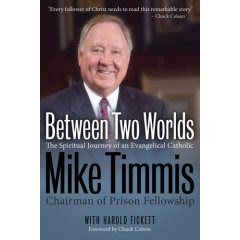
Between Two Worlds

This is a really long chapter and it doesn't do the book justice at all. I have long been a proponent of unity. Mike Timmis is certainly more qualified and has been doing it longer than I have. It is a tremendous book and well worth the money.
Introducing the new blog alliance devoted to Non~Fiction books, Non~FIRST, a component of Fiction in Rather Short Takes (FIRST). (Join our alliance! Click the button!) This is our very first blog tour. Normally, we will post every 15th day of every month, featuring an author and his/her latest book's FIRST chapter!
The special feature author is:
and his book:
NavPress (February 2008)
ABOUT THE AUTHOR:
 Mike Timmis had it all.
How does a kid from working-class Detroit become an international ambassador for Christ? And what motivated an evangelical-based ministry to choose this Catholic as its chairman? Mike Timmis’s inspiring life as a Catholic and evangelical leader reveals how our unity in Christ transcends the two worlds’ differences. From him, we learn how Catholics and evangelicals can go into an alienated world together as ministers of reconciliation and witnesses to God’s salvation and love.
Mike Timmis is a chairman of both Prison Fellowship in America and Prison Fellowship International. He was also a practicing lawyer and businessman. A Roman Catholic, Mike is deeply involved in ministry in his hometown of Detroit as well as projects in Africa and Central and South America. He and his wife, Nancey, are parents of two and grandparents of four.
On January 18, 1991, I was flying in a small two-engine plane in east-central Africa from Burundi to Kenya. Our party had just come from a wonderful meeting with Burundi’s President Pierre Buyoya where we’d shared the gospel with him and a number of cabinet ministers. Still, we were somewhat anxious because the Persian Gulf War had started the previous day. Right then, American fighters were in the air against Iraqi positions.
My wife, Nancy, and my son, Michael Jr., were with me, as well as Gene Dewey, the former second-in-command at the United Nations High Commissioner for Refugees, and Sam Owen, a fellow believer then living in Nairobi. This trip was part of the quiet diplomacy I had undertaken as a member of a group called The Fellowship. We worked on behalf of the poor by raising up Jesus with world leaders, one means of pursuing the ministry of reconciliation that Christ entrusted to His followers.
As we flew over northern Tanzania, the pilot was suddenly issued an order that we were to land immediately. I was sitting close enough to the cockpit to hear the squawking instructions coming over the radio. I quickly assured the pilot that we had the requisite permission to fly over Tanzanian air space. The State Department had issued an order to American citizens to stay clear of Tanzania, an Iraq ally, so I made sure—or thought I had—that we had permission to fly over Tanzania en route to Kenya. The pilot relayed my protest to the Tanzanians.
“No, you do not have permission!” came the reply. “You must land immediately, or we will force you down.”
We landed at the small city airport of Mwanza. As we stepped down onto the tarmac, a military jeep pulled up. A cadre of officials and police officers met us and immediately arrested the pilot and impounded the plane.
Their leader also demanded our passports. I was reluctant to give these up, because no matter what alternative flight arrangements we might be able to make, we would be stranded without passports. Because I had requested—and been granted—permission to fly over Tanzania, our detention was making me angry. (Later I found out that the flight service we were using had previously flouted Tanzanian regulations and had again on this occasion.) Because my family was with me, I restrained my temper. My jaw clenched, I reluctantly handed over my passport.
We were allowed to find our own accommodations in Mwanza, and we found a car that took us to the New Hotel Mwanza. I would hate to have seen the old Hotel Mwanza. We were the hotel’s only guests, and for good reason. The first thing I did was check under the bed for bugs and rats.
As we caught our breath in our hotel room, I asked Nancy if she was afraid. “No, I’m not afraid,” she said. “You are with me, our son is with us, and God is with us.”
Even though we were stranded in an African backwater, I felt the same. I knew I was where God wanted us to be and felt—as I always have in my travels to what are now 114 nations—that God was going before me. In my many years of traveling on various missions, I’ve always felt protected by the special anointing that comes with God’s commission. Lost geographically, I was still at home spiritually, and for that reason at peace.
Our party of five met for dinner in the hotel’s restaurant. My family is Catholic, and Gene Dewey and Sam Owen were evangelicals, but the unity we knew in the Lord sustained us, even when the dinner turned out to be rancid.
After a little while, the hotel manager, having no other guests, joined us at our table. This made way for the night’s entertainment. Four strapping young men in red overalls—the kind gas station attendants used to wear—came out, and with lamplight smiles launched into song:
My baaaaah-dy lies over the ocean,
My baaaaah-dy lies over the sea. . . .
Yes, they said “body” not “bonnie,” and since we all felt an ocean away from home, the song struck us as hilarious. Then the quartet followed with “Home on the Range,” and we nearly wept from laughing. We clapped and cheered, showing our appreciation to the young men. They had done us more good than they could possibly have known.
I spent the next day searching for transportation out of Mwanza. The others paid special attention to BBC radio reports on the progress of the war.
Within thirty-six hours, a plane flew in for us from Nairobi. We went out to the airport to meet it, eager to hightail it out of there. But when we arrived at the airport, no one seemed inclined to return our passports. Thankfully, Gene Dewey was already anticipating this. Because of his time with the United Nations, Gene had the most experience in dealing with government officials. He had also been a colonel in Vietnam and had a knack for being cool and fiercely determined at the same time. I kept asking him when he thought we’d get our passports back—and how. “Mike, don’t worry about it,” he’d say.
As we were walking out to the plane, bags in hand, with a couple of Tanzanian officials to the rear in escort, I looked over at Gene and said as forcefully as I could under my breath, “Gene, our passports!”
“Not now, Mike,” he replied quietly but just as forcefully. “Just don’t worry about it. Keep walking.”
It wasn’t until we were in the air that Gene unbuttoned his shirt and fished out all our passports.
“How did you get those?” I asked.
“I came out to the airport last night,” he said. “I broke into the office and took them. If you had kept talking, they might have found out!”
Gene’s street smarts reminded me of how I’d grown up and made my way. I asked myself, “How did I get here? How did a kid from the rough and gritty streets of Detroit end up on a trip to see international dignitaries? How could a guy born and raised Catholic go on a mission representing a largely evangelical organization?”
I’ve had many amazing, frightening, and heart-rending experiences as I’ve traveled the world in service to the King of kings. And one thing I can say for certain: when you entrust yourself completely to God and make yourself available to Him, you’re in for an adventure.
***
“Mike, the only way you can be ensured of success,” my father once told me, “is if you take it into your own hands and go into the professions.” I was an Irish Catholic kid from the battling West Side of Detroit, the youngest of five children, keen on finding my own place in the world.
My father remains the strongest man I think I’ve ever known, with enormous hands, a powerful physique, and an energy that stayed with him into his nineties. I saw him lift a car out of a ditch when he was in his sixties, although he did injure his back. As young men, he and his brother Brian went out to western Canada, where they took jobs as real-live cowboys, breaking horses. Brian stayed, became a Mounty in Regina, Saskatchewan, and played professional football there. My dad returned to Ottawa and played wingback for the Ottawa Roughriders.1 There he met an Irish girl who was both passionate and practical, and he had the good sense to ask for her hand.
My parents emigrated from Canada to Detroit in 1930, at the beginning of the Great Depression. My mother’s uncle had moved there earlier from Ottawa and convinced my parents that the Motor City was one of the last places in North America where a man could find regular employment. Our relatives soon moved back to Ottawa, but my father and mother stayed, and Dad hired on with the city as a bus driver. He eventually worked his way up through the civil service system and retired as a bus station manager.
Most of his working life turned out to be far different from the spirited and reckless days as a cowboy and pro football player. I was the last of five children, separated in age by twelve years from my eldest sibling, Margaret Claire. My parents were well into their forties when I was born in 1939, and so I never knew my father as a young man. Or a particularly happy man—not at least until much later in his life when, in retirement, he was able to live on a farm and keep horses.
While I was growing up, I remember my dad collapsing into his chair at the end of his long days. He’d take up one of Luke Short’s westerns—he probably read ten times every novel the man had ever written. I can’t say for certain whether he ever graduated from high school. I know he served in the Canadian forces in World War I, beginning in 1914 at seventeen. And since he was born in 1897, so he might have left for the war before graduating.
We were a serious family, always working or studying or going to St. Brigid’s, our local Catholic parish. Our faith was a great comfort to both my father and mother, but it was also a cause of concern as to the children’s futures. My father felt that Irish Catholics were discriminated against, so he insisted that my brothers and I become doctors.
At the time, all of Detroit was divided into ethnic neighborhoods of Poles, Eastern European Jews, Irish, Germans, Italians, and so on. We lived in an Irish Catholic enclave. The houses stood one against the other on forty-foot lots, with bay windows to one side of half porches. The weave of that community was very close-knit. As a ten year-old, I once cursed on a playground a block from home and received a slap for it when I came in ten minutes later for supper. A neighbor had heard what I said and promptly telephoned my mother.
But such strictures helped keep the city a safe and open place where I was free to roam. Not only did we not lock our front door, but I don’t remember there being a key. From the age of eight or nine, I could walk down to the local candy store and then hop busses down to Woodward Avenue, where Hudson’s, the giant department store, mounted huge Christmas window displays.
At the same time, the neighborhood had its own pugnacious code: You stood up to a fight or you simply couldn’t live there. Taking a beating was far better than being constantly harassed, so I did a lot of fighting as a kid. I can remember coming home from school one winter day. My sister had taken the bus home from college, and one of the neighborhood bullies, whom I’ll call Larry, had thrown an “ice ball” that hit her in the face.
My dad said to me, “Take care of him.”
Larry’s reputation as a bully was well earned, and I said, “Dad, this guy is going to kill me!”
“I don’t care,” Dad replied sternly. “You go out and you take care of him—now!”
Anger with my father for ordering this confrontation drove me out into the streets. When I caught sight of Larry, I ran after him, yelling at him vehemently. He hardly knew what hit him! I was so angry with Dad that I beat the living daylights out of the kid. I had him down on his back by the curb, where water was running from the snowmelt, and I whaled on him.
My father may have been so concerned about prejudice against Catholics because he’d had to overcome that obstacle when he started courting my mother. My dad’s family was high-church Anglican. He converted when he married my mother, which wasn’t much of a stretch, since high-church Anglicans worship in a liturgical style as close to Catholicism as Protestantism gets. Still, crossing to Rome was always an issue, especially at a time when Help Wanted signs included the postscript “No Irish Need Apply.”
My mother’s family, the O’Reillys, originally from County Clare, were Irish Catholics to the core. My mother was a petite woman, not more than five feet tall. In appearance, she was what they call dark Irish, with mahogany and cherry wood strands in her hair and a flame in her light-blue eyes. The O’Reillys, who owned brickyards, were far more well-to-do than my dad’s family.
The pictures of my mother that I keep close by are candid shots; they show her as a young woman with the new bob of short hair that came in with the 1920s, striking a jaunty attitude. I can imagine this young Irish lass losing her head over my powerful, handsome father.
She was told never to have children because of a weak heart, and then she went and had five. Better educated than my dad, she had been to what was called a “normal school,” or teacher’s college. I would guess that many of our family’s intellectual and creative gifts came through my mother. My brother Gerry, who the family called Sonny, would go on to be a famous cardiologist; Hilary, an outstanding surgeon; and both my sisters, Margaret Claire and Agnes Cecile, went to college and had marriages and careers that took them well up the economic ladder.
Once married, my mother never worked outside the home but gave herself completely and utterly to her husband and children. That didn’t keep her from having a sharp tongue, or so my sisters claim; I never was cut deeply enough to remember her that way. It was not so much that I was the “baby” of the family, but that my mother’s health was in serious decline by the time I reached early adolescence. She was too exhausted to protest against much of anything by then.
Both my father and my mother led our family in practicing our Catholic faith. In fact, when I think of my religious formation, I remember the faith as a distinctly family affair. Our devotions as a family made a great impression on me. We devoted the month of May to praying with Mary—not to Mary—to her son, Jesus.
Every Sunday night, my whole family knelt down at seven o’clock and prayed for the conversion of Russia. My brothers Sonny and Hilary began to protest against the practice when they became busy medical students, but even then my parents insisted that the time be set aside.
On Tuesday evenings, we went to St. Brigid’s for devotions, praying the rosary, making novenas, or listening as a “mission” was preached—what evangelical Protestants know as a revival service. These devotions largely disappeared from the Catholic Church after Vatican II in the early sixties and only now are being reinstated. The piety they encouraged came to be regarded as old-fashioned. Through these devotions, the Catholics of my parents’ generation—and generations before them—experienced the Catholic faith as intensely personal. The devotions also encouraged them to recognize their faith as God’s work in their lives. I experienced enough of this to clearly understand that my salvation was dependent on the completed work of Christ—not on my own righteousness. There was never a time when I was under the misimpression that my “works” would get me into heaven.
I attended the local parish school, St. Brigid’s, where I was prepared for First Communion and Confirmation by the sisters who taught us. My first confession at the age of six saw me truly penitent, if confused. There were no secrets in our Irish Catholic family, and everyone wanted to know to what I had confessed. I told my brothers and sisters that I had admitted to adultery about a hundred times.
“You did?” they asked. “What did you mean?”
“That I picked my nose!”
I’m sure the priest about fell off the chair as he smothered his laughter.
Still, my First Communion was a memorable experience at which I received a child’s prayer book—one that I only recently parted with when I gave it to my granddaughter on the occasion of her First Communion. It meant that much to me. Even as a young child, I took the privilege of being invited into communion with God very seriously. I think most children do, because they understand intuitively what it means to be God’s child.
At St. Brigid’s, we were schooled in the Baltimore Catechism, so when I was confirmed in the Catholic faith in fifth grade, I knew all the right answers to the classic questions. Who made us? Who is God? Why did God make us? In retrospect, I wish I had understood and experienced these rites of passage more in terms of an evolving relationship with Christ rather than as childhood milestones. Confirmation comes later now, when a child is about twelve or thirteen, which I think is good; older children are better equipped to understand Confirmation as a personal commitment. At the same time, I’ve always been glad that the rudiments of the faith were drilled into me. This provided me with certainty and hope at many difficult times in my life, especially in the crises that crouched around the next corner.
***
My peaceful, happy childhood was disturbed by illness when I was about twelve years old. I returned home from a Boy Scout retreat with pneumonia and what the doctors suspected was rheumatic fever. I was sicker than I probably knew for a number of months and missed virtually all of eighth grade. After I regained my strength the first time, I had a relapse, and our doctor became worried about the condition of my heart. He ordered that I not participate in any sports. When I entered U of D High (University of Detroit High School, now called University of Detroit Jesuit High School and Academy), I was allowed to climb the stairs to the freshman and sophomore classrooms only once a day.
This was especially frustrating because I’d always had amazing stamina; I really didn’t pay much attention to the doctors’ orders except when under the direct supervision of my parents or the school. Still, the inactivity led to weight gain, and I became a pudgy kid, which I hated. What’s more, the physical isolation my illness brought with it became an emotional isolation. Like my father, I took refuge in books, becoming a voracious reader. I liked history and novels especially, and, as I often had trouble sleeping, I would grab a book and read long into the night.
My mother worried over me because of my health, of course, and that added to my brothers’ and sisters’ complaints that I was being spoiled. One time, Hilary was especially upset with me. We were arguing, and my mother admonished him to lay off me.
“He’s turning into a spoiled jerk,” Hilary insisted.
“Look at me,” she replied. “You’ve had a mother. He’s not going to have a mother. Leave him alone.”
Anyone could see by her pallor that her health was in decline. Indeed, her heart condition was growing rapidly worse. I vividly remember the night she died, April 11, 1955. It was Easter night. Sonny, a senior, and Hilary, a junior in medical school, were attending to her. They were talking on the phone to her doctor, their voices rising and becoming more strained as they followed his instructions with little effect. I came into her room while this was going on and heard Sonny yell into the phone, “I’ve already given her a shot of adrenaline and it’s not working!”
I looked at her, propped up on two pillows. I asked her, “Mama, what’s wrong?”
She was always a very prayerful woman, and she chose to answer in the only way she could. She took out her rosary from between the pillows and with her thumb held up the crucifix to me. That was the last thing she did. I was fifteen years old.
My father had always revered and worshiped my mother. He mourned her loss terribly. It so happened, as well, that her death came as the nest was about to empty. Long before my mother’s final illness, Margaret Claire and Sonny each had been planning their weddings. Both were married and gone within two months of my mother’s death. Hilary left for the University of Pennsylvania to begin his residency in surgery. The following year, Agnes Cecile, married as well.
My father never had many friends. He didn’t go out with the boys, and he drank hardly at all. For many years, he had lived a life of heroic, if quiet, sacrifice as he devoted himself to his wife and children. Our at-home family of seven had quickly dwindled to two.
Within a year after my mother’s death, my father and I fell into a grim Sunday regimen. We would go to Mass at ten o’clock, then drive to the cemetery, where my father would weep so uncontrollably that I would have to drive us home.
I was very lonely, but also very religious. We had Mass every day at U of D High, and that was important to me. I thought long and hard about becoming a priest.
Every day, when school let out at 2:35, I would stop by the chapel once more. I’d sit there and talk to my mother and pray, then hitchhike or take the bus home to an empty house, which was difficult.
I was fortunate to have my sisters and brothers and good friends to lean on. They made up much of what was lacking at home. Margaret Claire became like a second mom; as the eldest she had always nurtured me. When she married two months after my mother died, she and her husband, Russ Hastings, rented a small apartment only two or three miles from where we lived. She was extremely good to me, providing a desperately needed last dose of mothering.
I would often ride over to their apartment on my bike. Margaret Claire taught me manners, particularly how to behave around young women—a subject of increasing interest. She also taught me how to dance. She would put “Peg of My Heart” and the other romantic ballads of the mid-fifties on her old phonograph and show me how to glide with my partner around the dance floor. She’d let me cadge a cigarette from her pack now and again, but “only one,” she’d say, keeping to a motherly moderation.
Margaret Claire had worked as an executive secretary before marriage and would later raise seven children of her own. Russ was a CPA and became comptroller of Dodge Truck. They were the first among my family members to enter a whole new socioeconomic class.
Within eighteen months of my mother’s death, I underwent a transformation that was partly physical, certainly emotional, and had unexpected spiritual extensions. I began to realize that my brothers and sisters were off making their own lives. I felt that I was completely on my own and that I would rise or fall on my own strength. My father’s admonition that I take my success into my own hands became an implacable necessity. At the deepest level, I decided that I was going to live my life and not be a victim. I wasn’t going to feel sorry for myself. I was going to carve out my own life, whatever it took. I began hardening myself and maturing swiftly.
Between my junior and senior years of high school, I determined not to be fat anymore. I fasted, eating sparingly, all summer while working as a house painter in the sticky Detroit heat. My last growth spurt hit at the same time, taking me over the six-foot mark. I lost thirty pounds and grew about four inches. When I came back to school for my senior year, people hardly recognized me. The following summer, when I was working as a scaffold painter with a crew of older men, they took to calling me “Six O’clock,” because I was as thin and straight as clock hands at six o’clock.
Losing so much weight renewed my confidence and helped me reconnect with the tremendous stamina and energy I’d known as a child. I felt powerful and ready to meet life’s demands—on my own terms.


Subscribe to:
Posts (Atom)